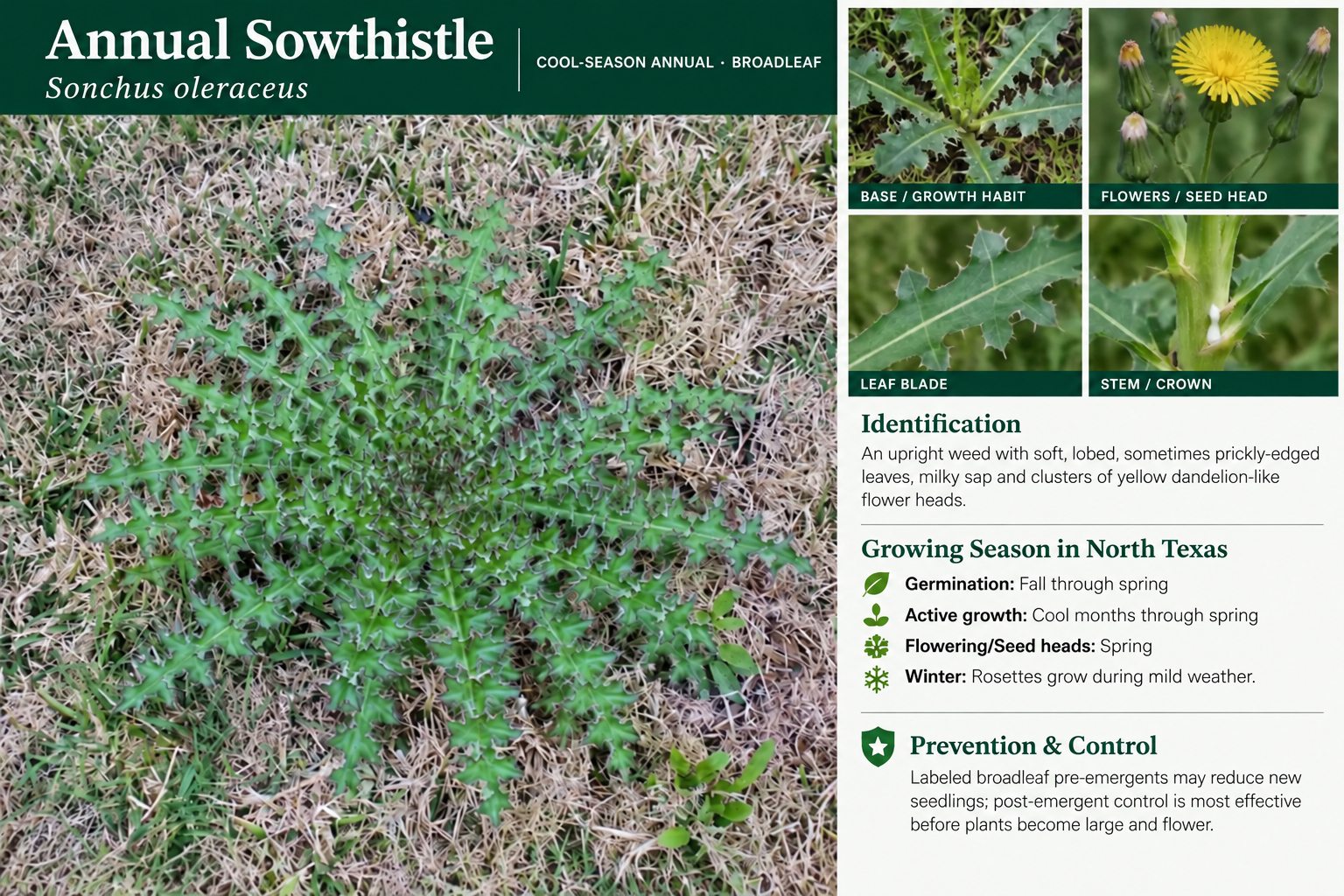
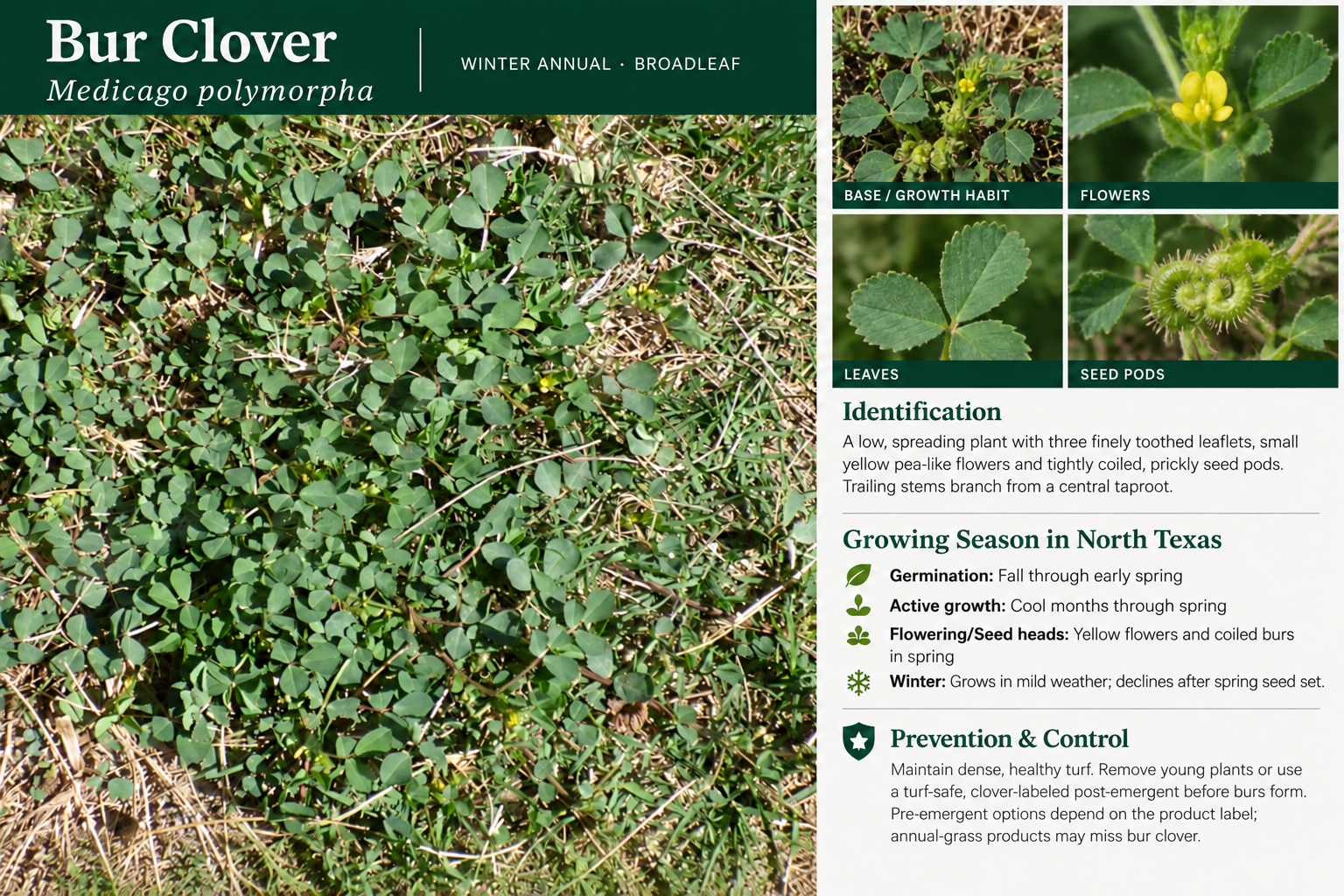
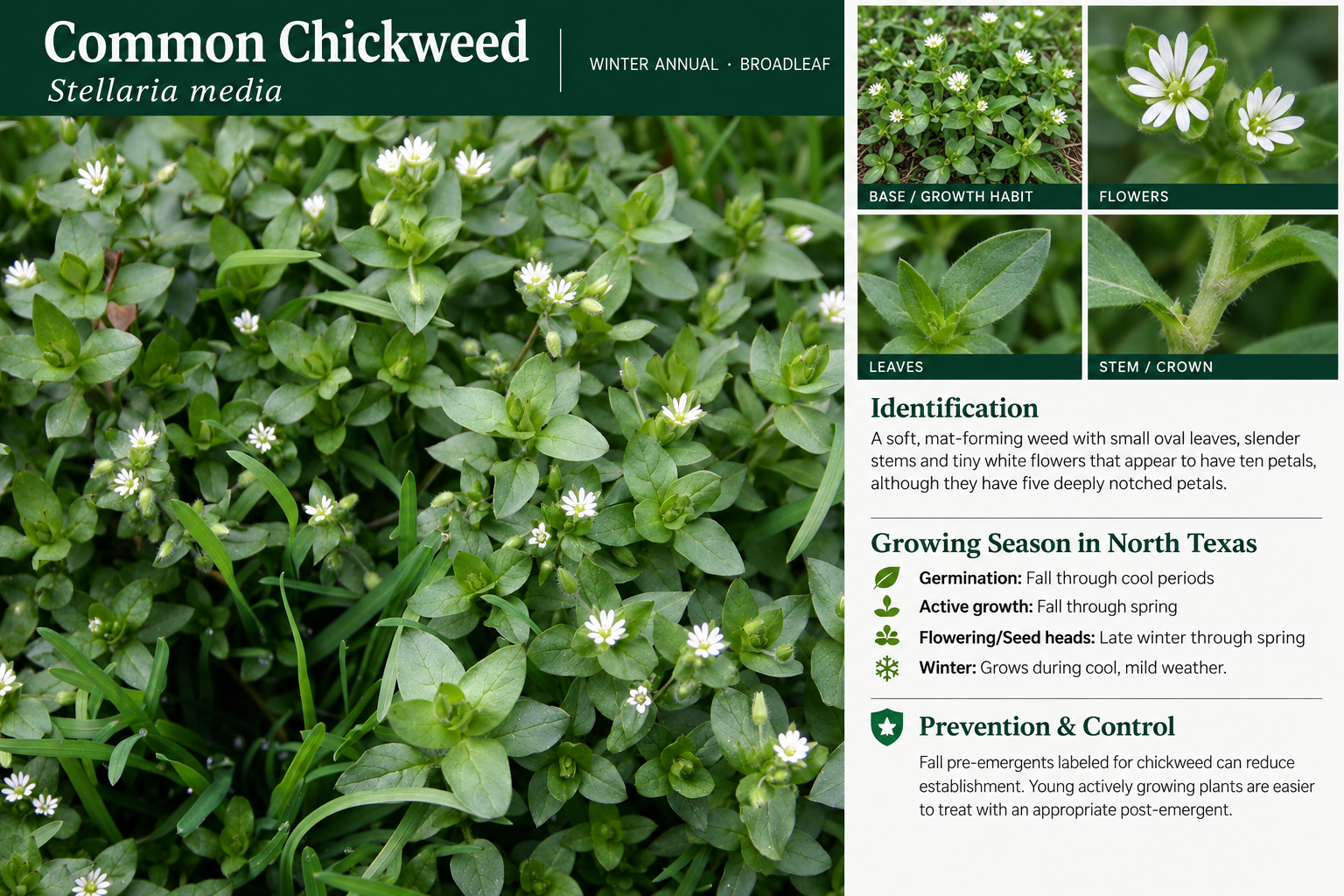
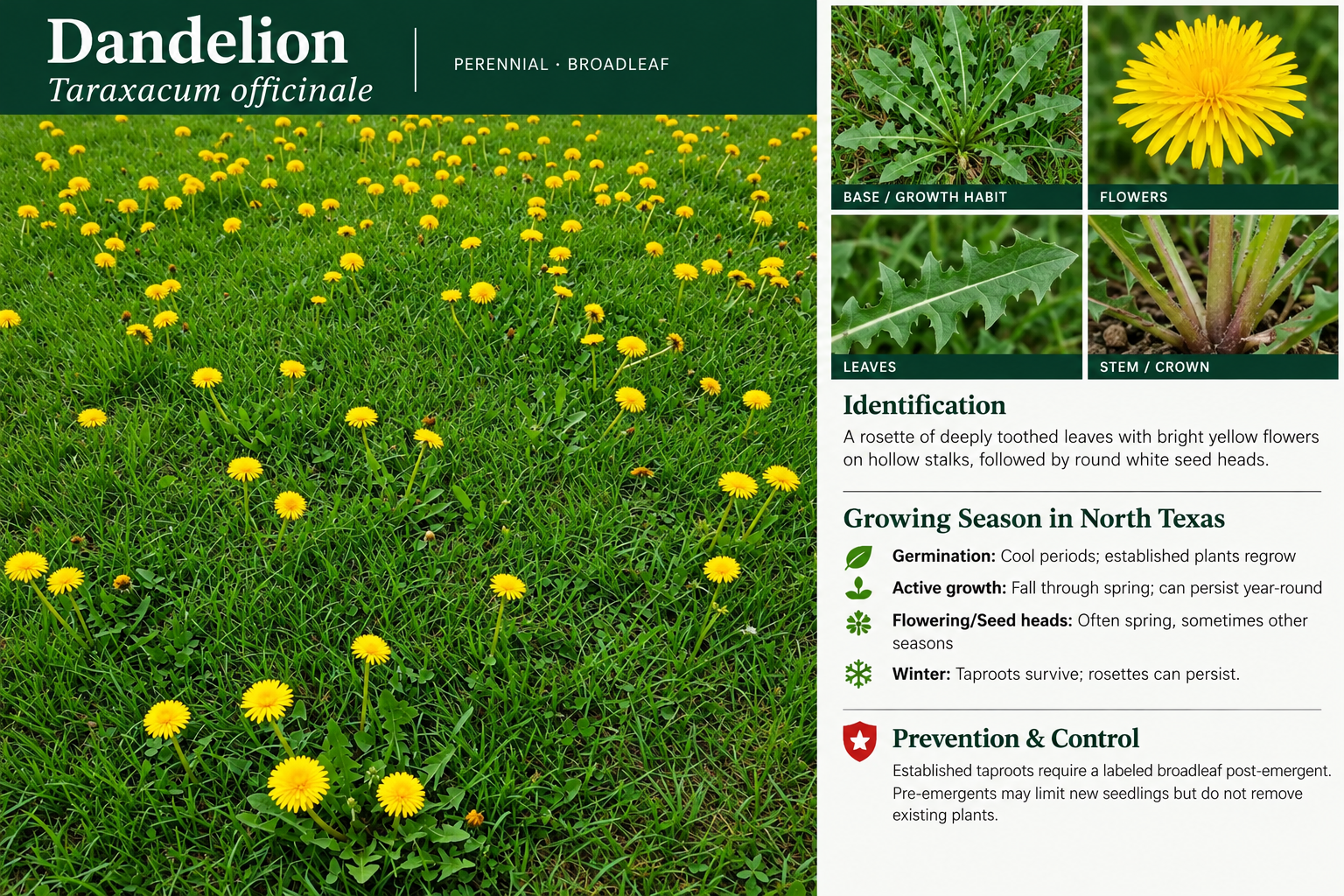
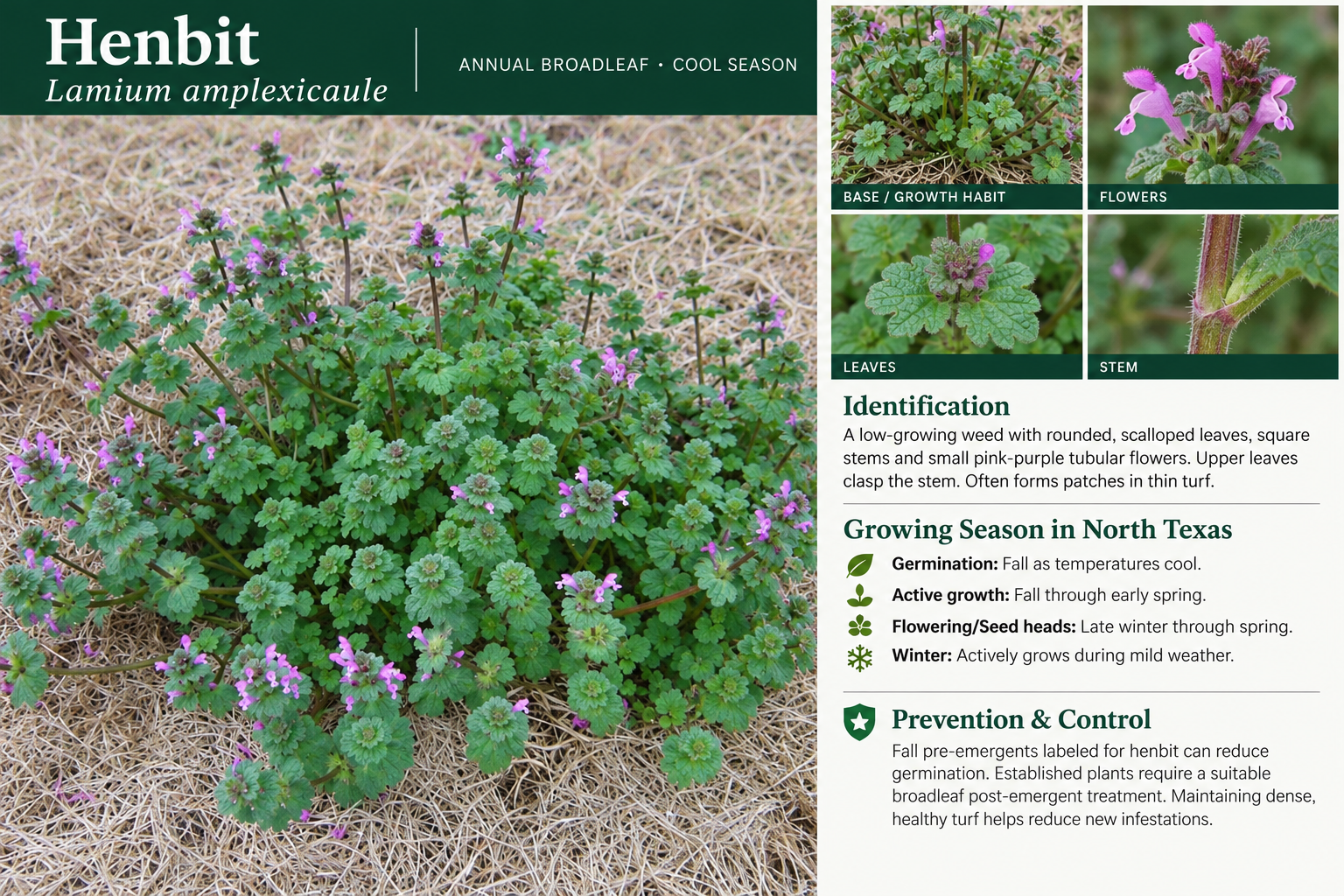
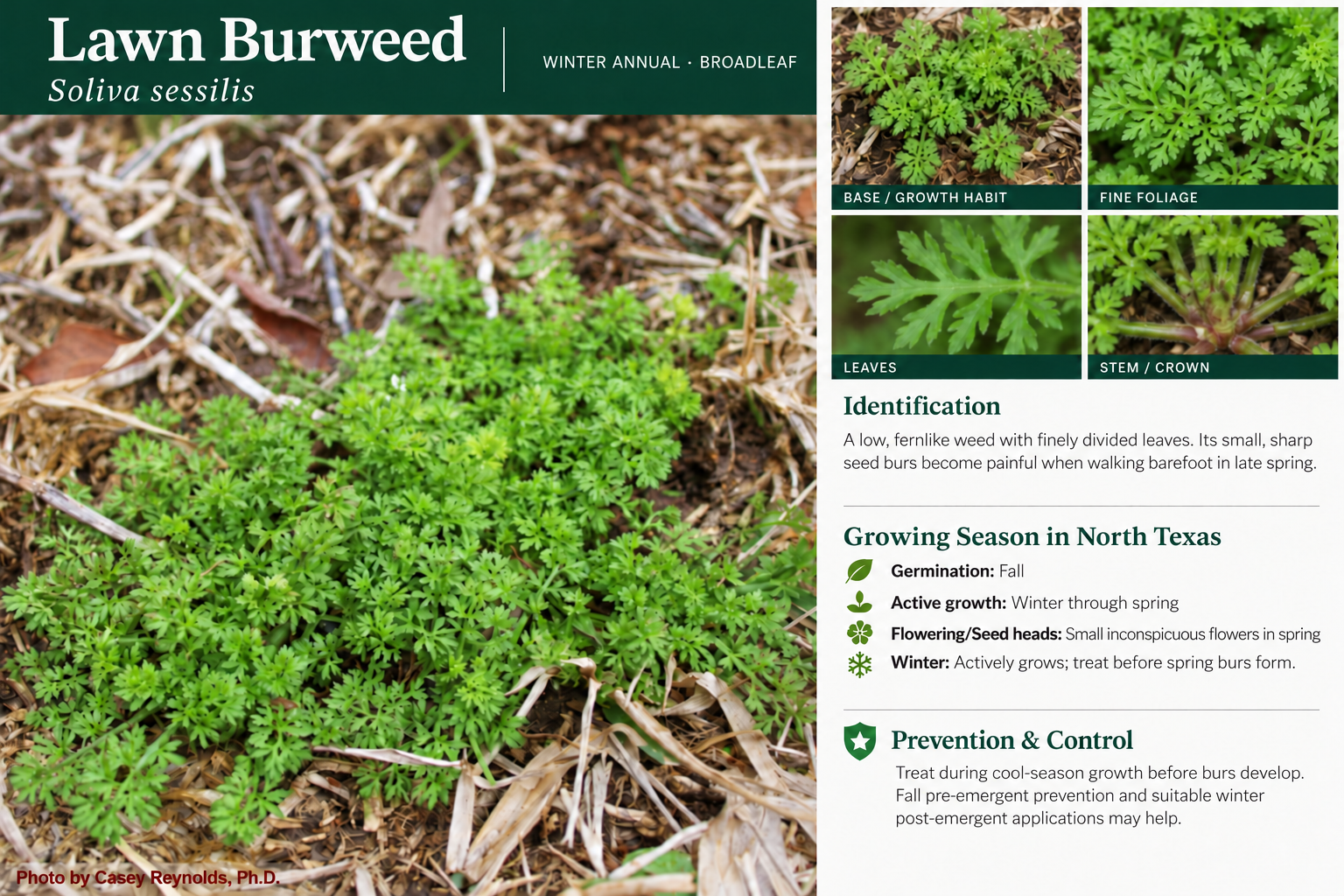
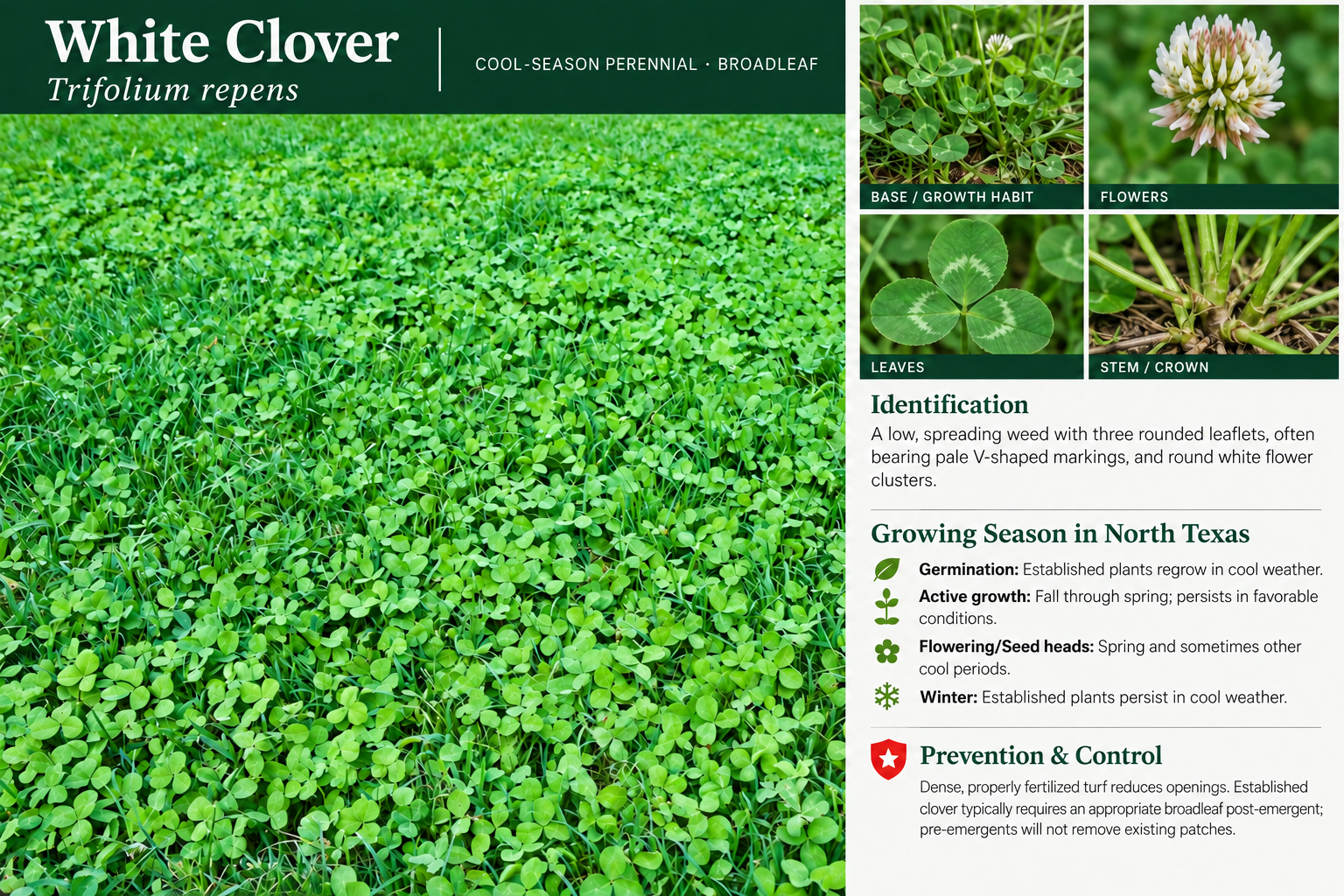
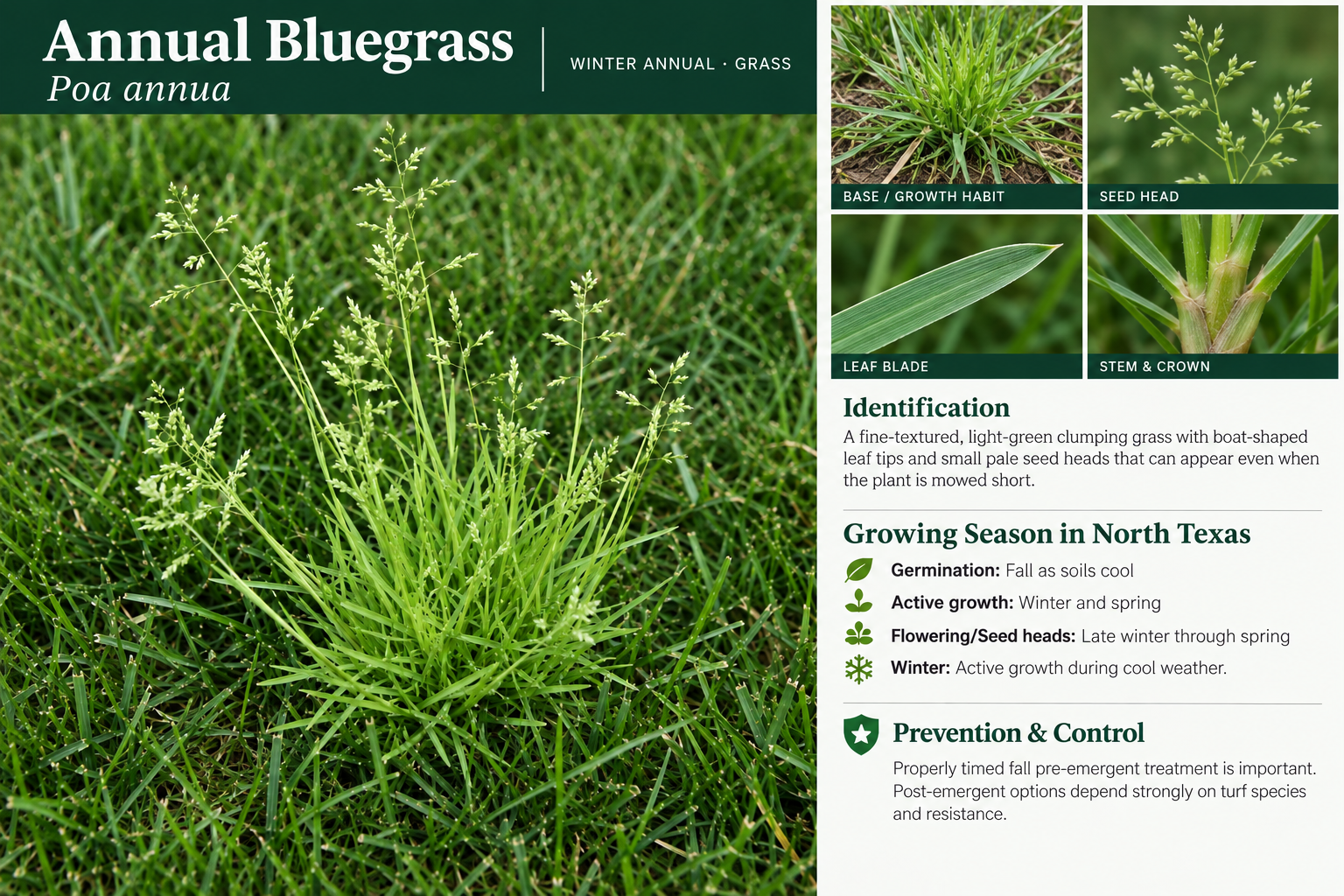
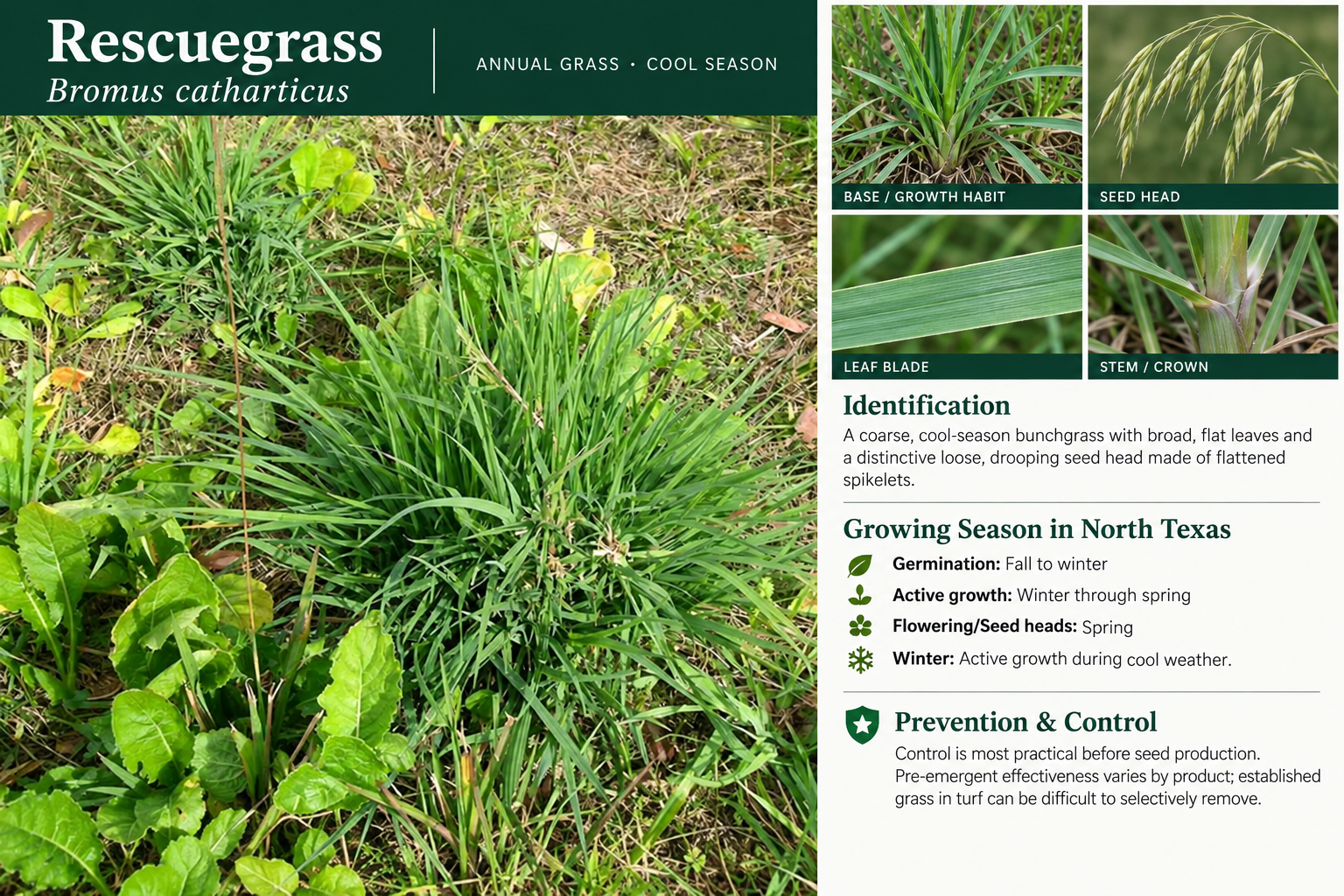
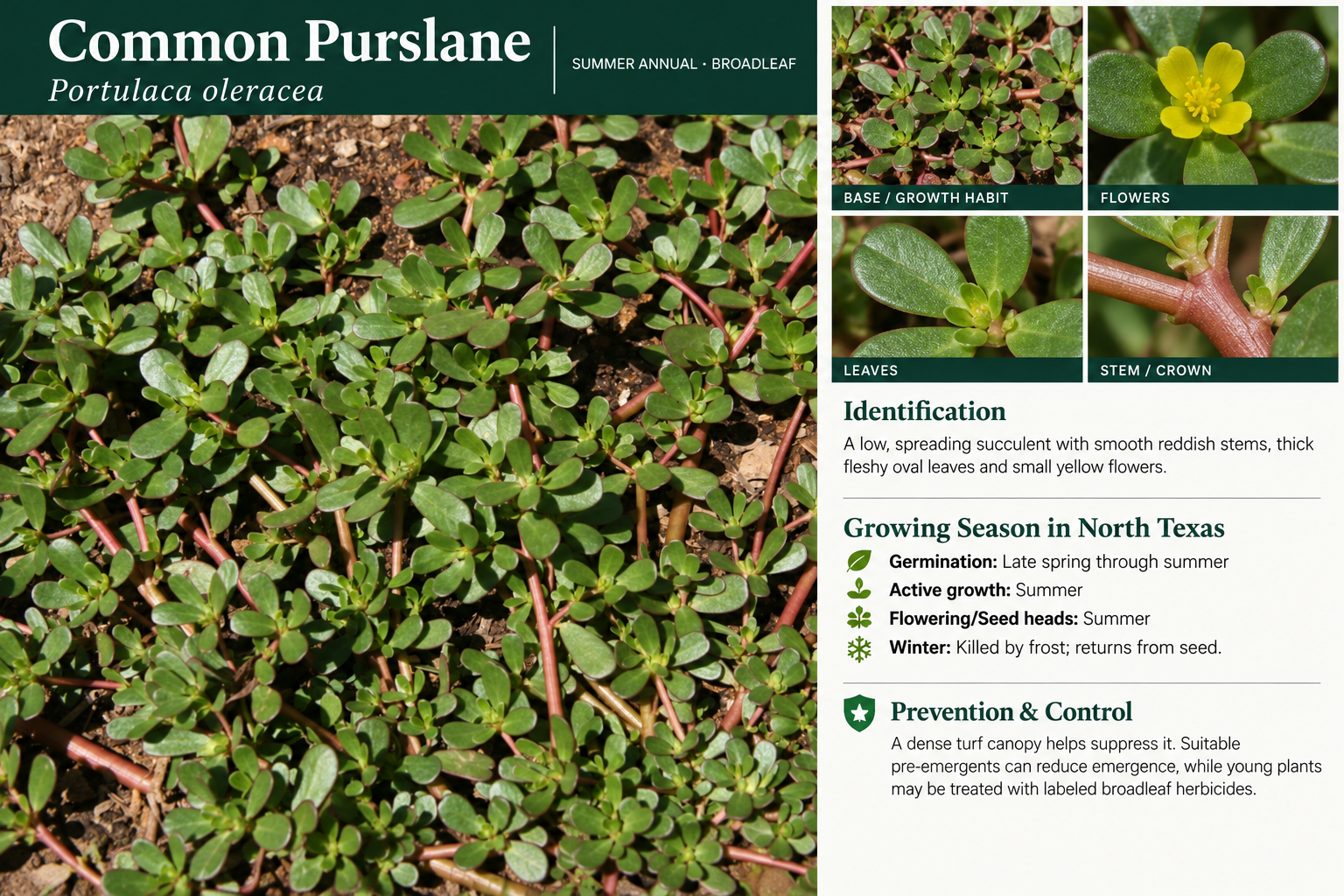
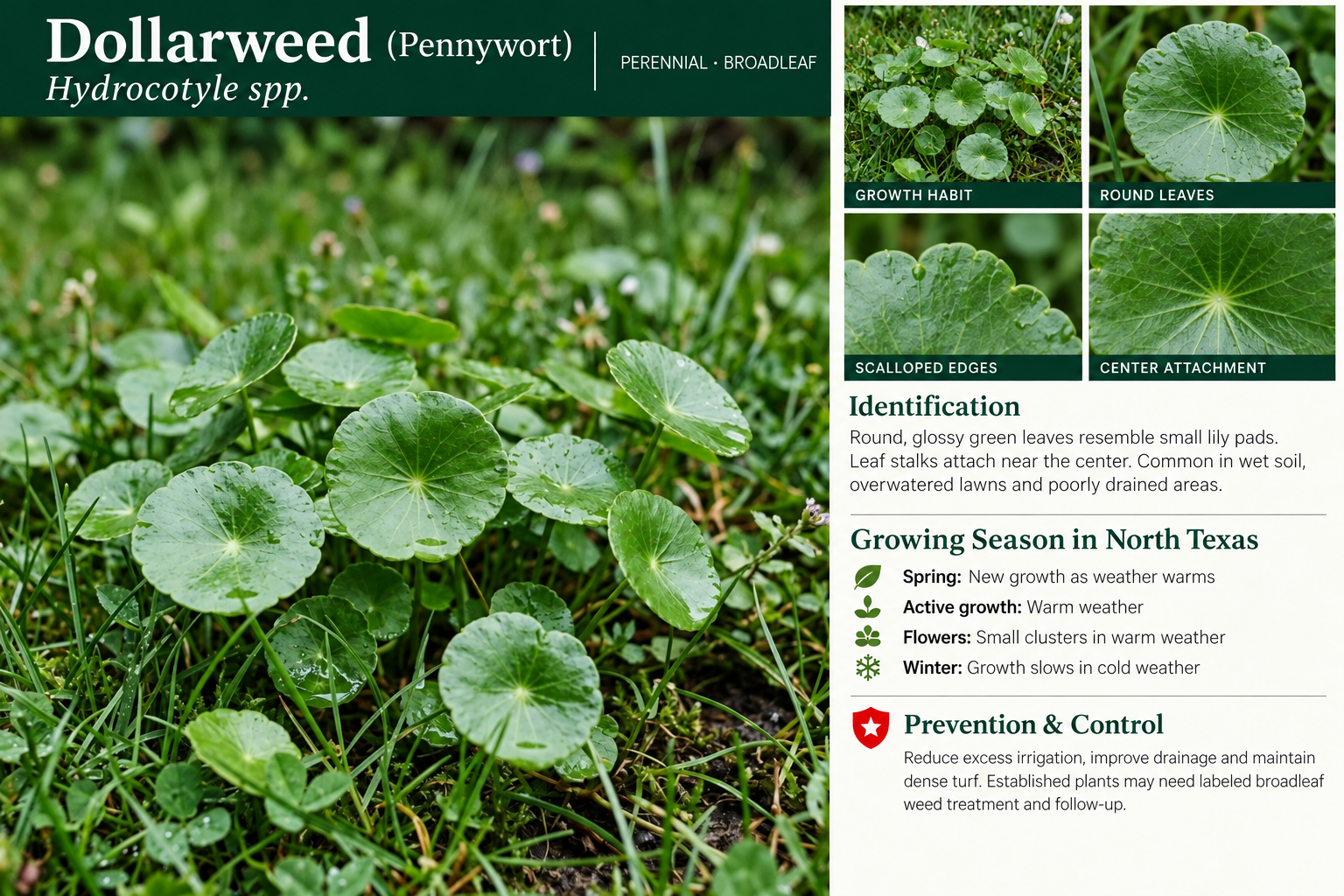
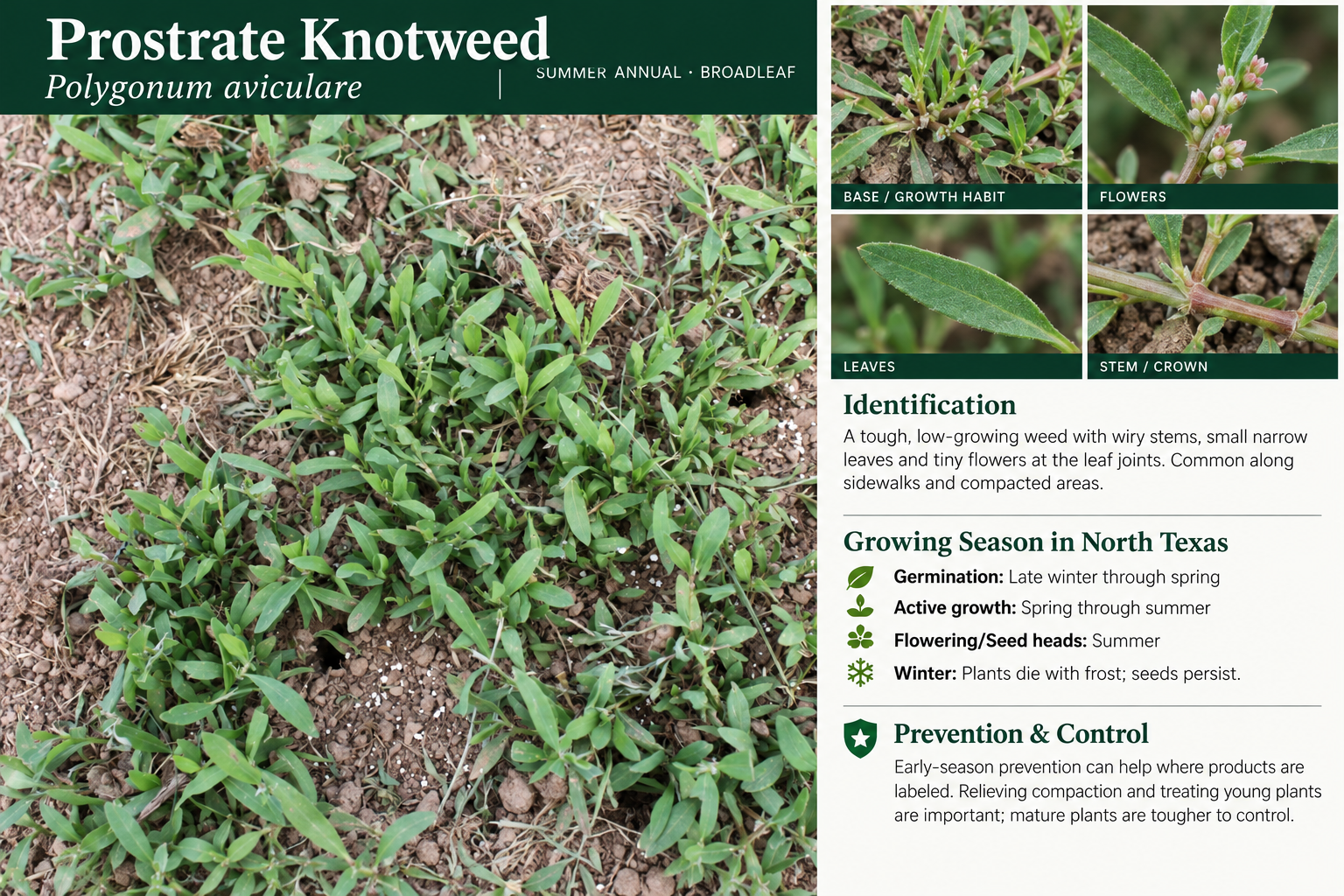
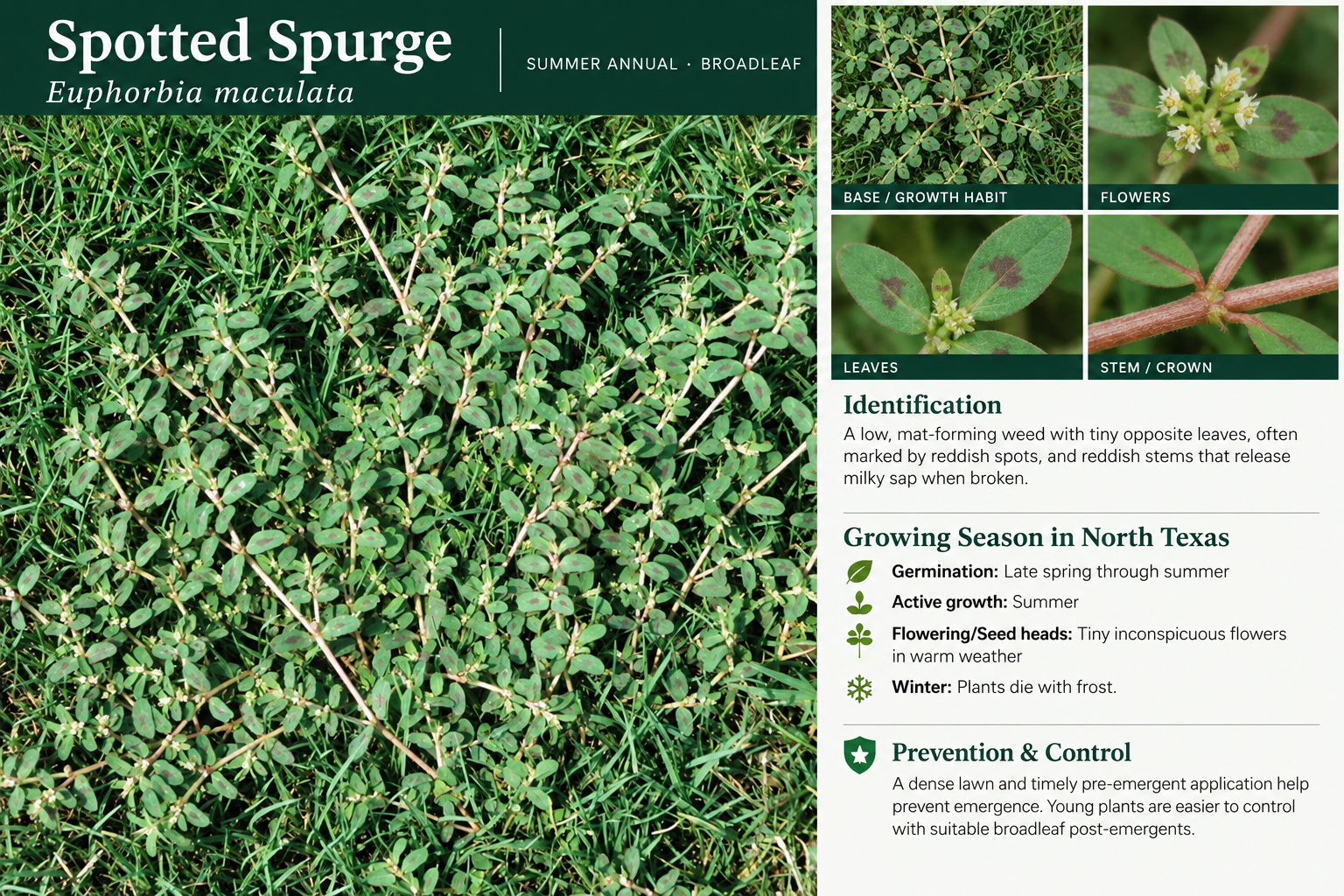
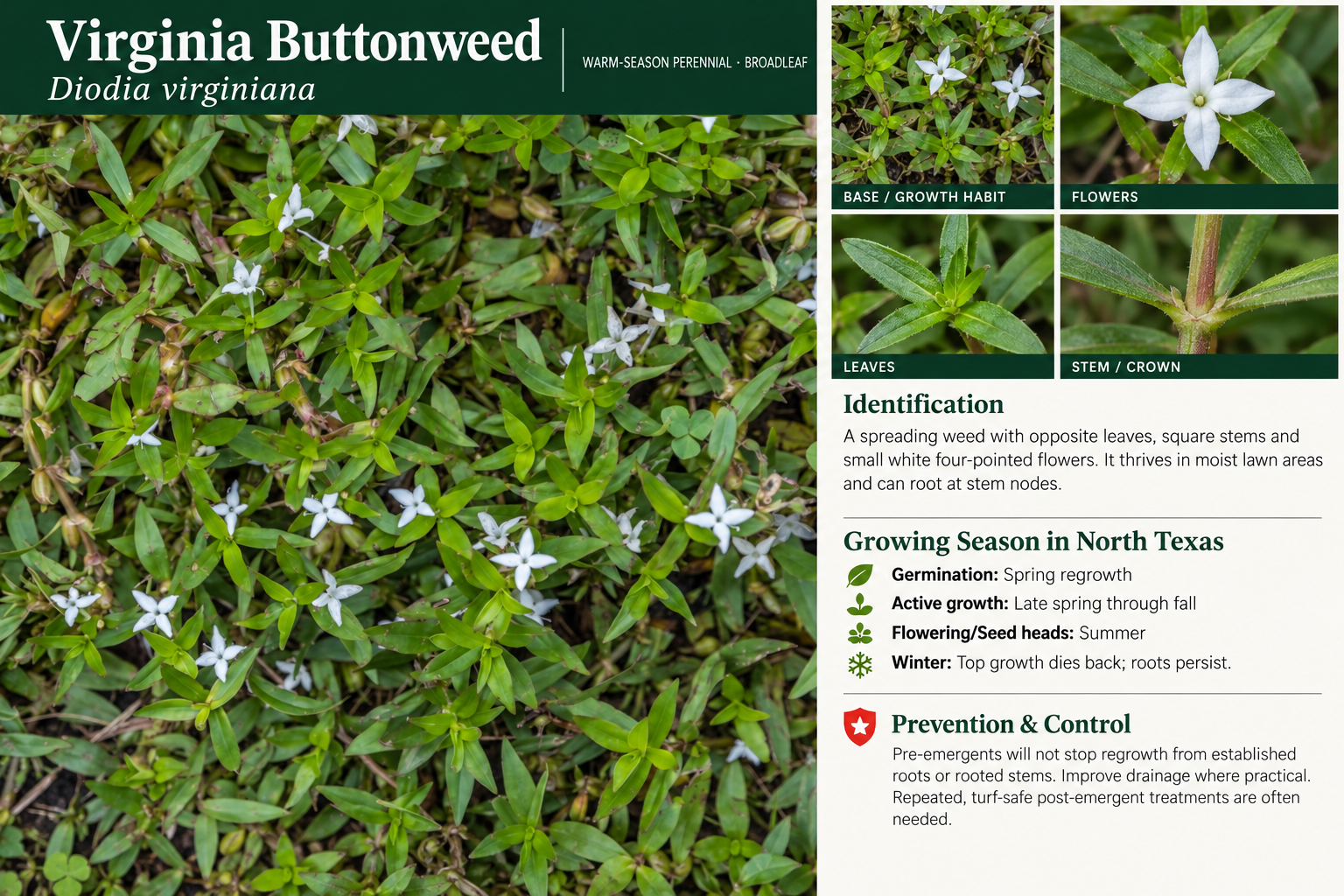
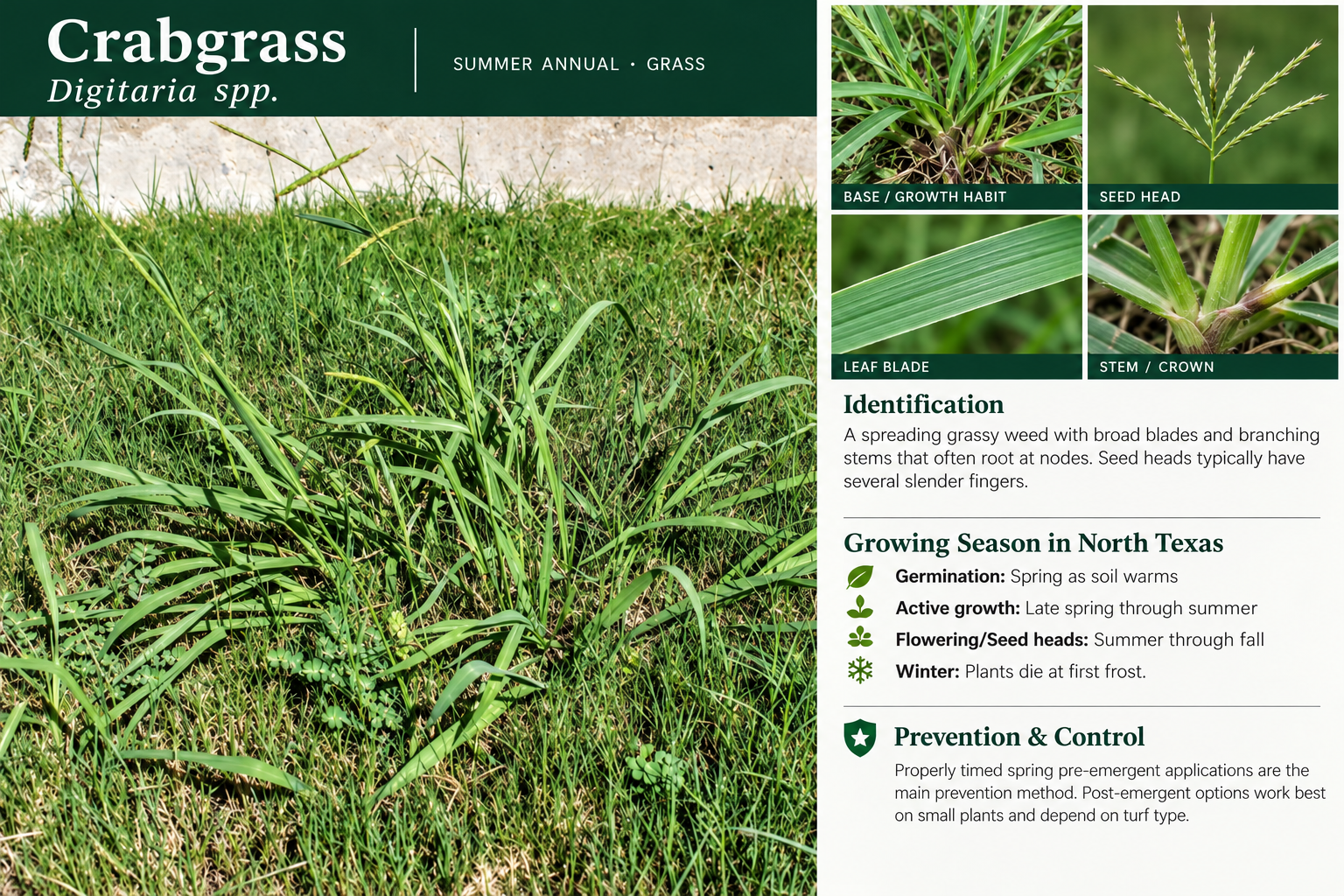
Use the photos below to identify common lawn weeds, learn when they grow, and understand how they’re controlled.
Find your weed by its photo. Weeds are grouped by cool and warm weather, then by broadleaf and grassy types. Select a photo to jump to its full information.
WEED REMOVAL & CONTROL
Should I pull it or leave it for treatment?
A few isolated weeds may be worth removing by hand.
Removing isolated weeds
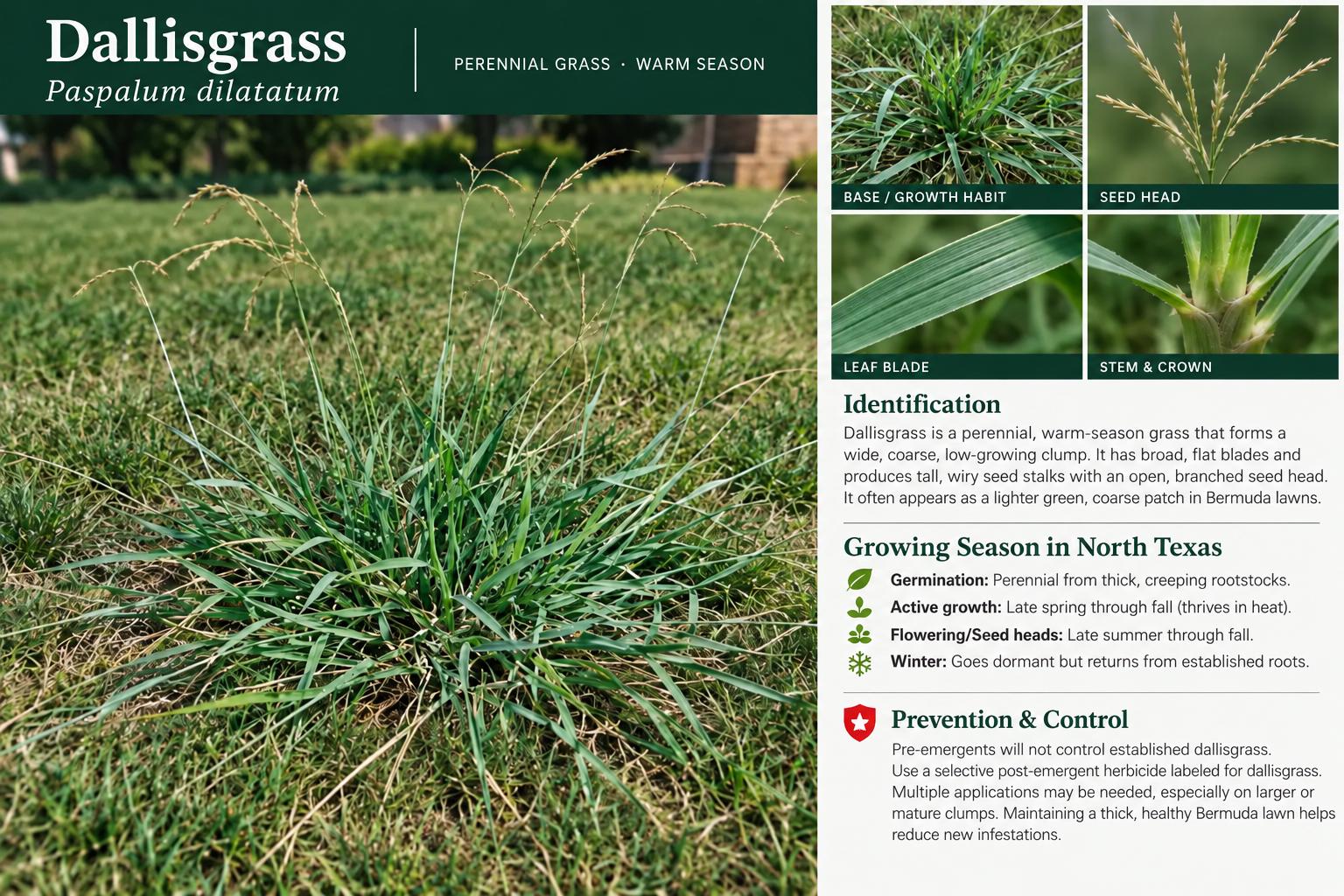
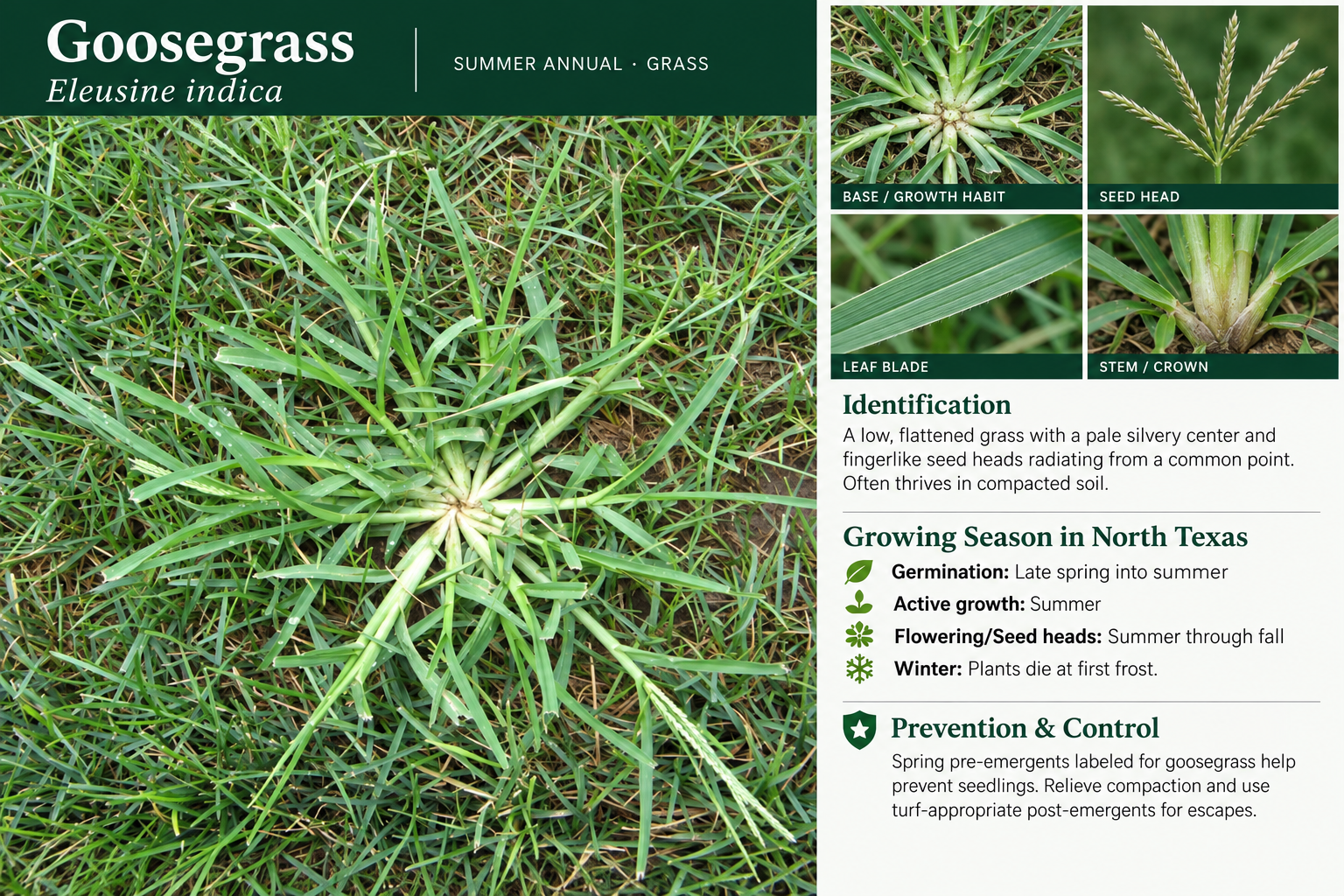
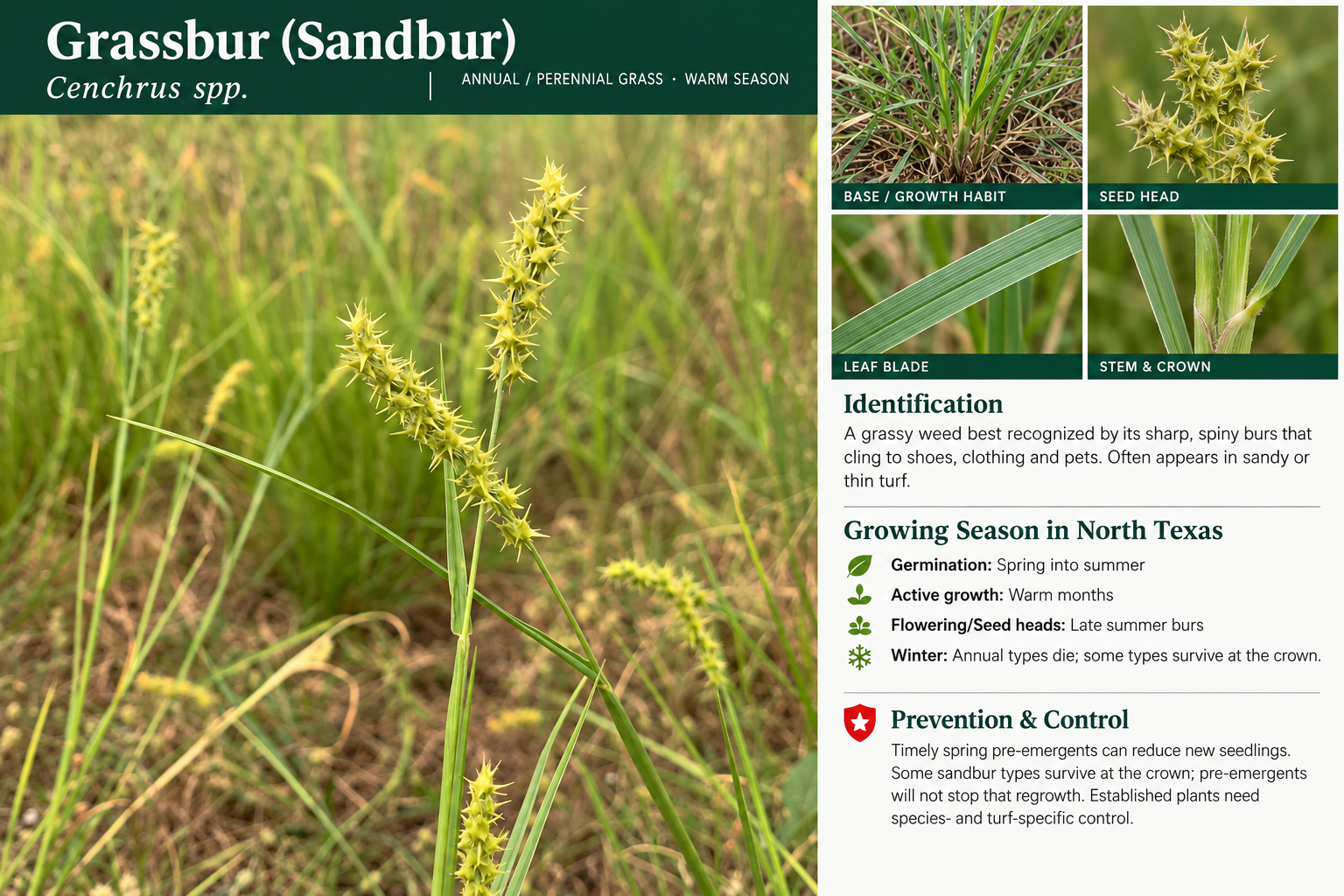
Digging out individual Dallisgrass or Sandbur plants is sometimes the best option. Isolated Dandelions can also be dug out, while young Crabgrass and Purslane are good candidates for hand removal.
Remove weeds before they produce seeds or burs when possible. Pick up removed plants and pieces, especially Purslane, which can reroot.
WHEN YOU PULL OR DIG
You’re welcome to pull or dig out any weeds you find in your lawn.
If you do, remove as much of the entire plant as possible—including the roots, crown, and any underground stems or tubers—not just the leaves. This gives you the best chance of preventing regrowth. Collect the removed plants and pieces afterward.
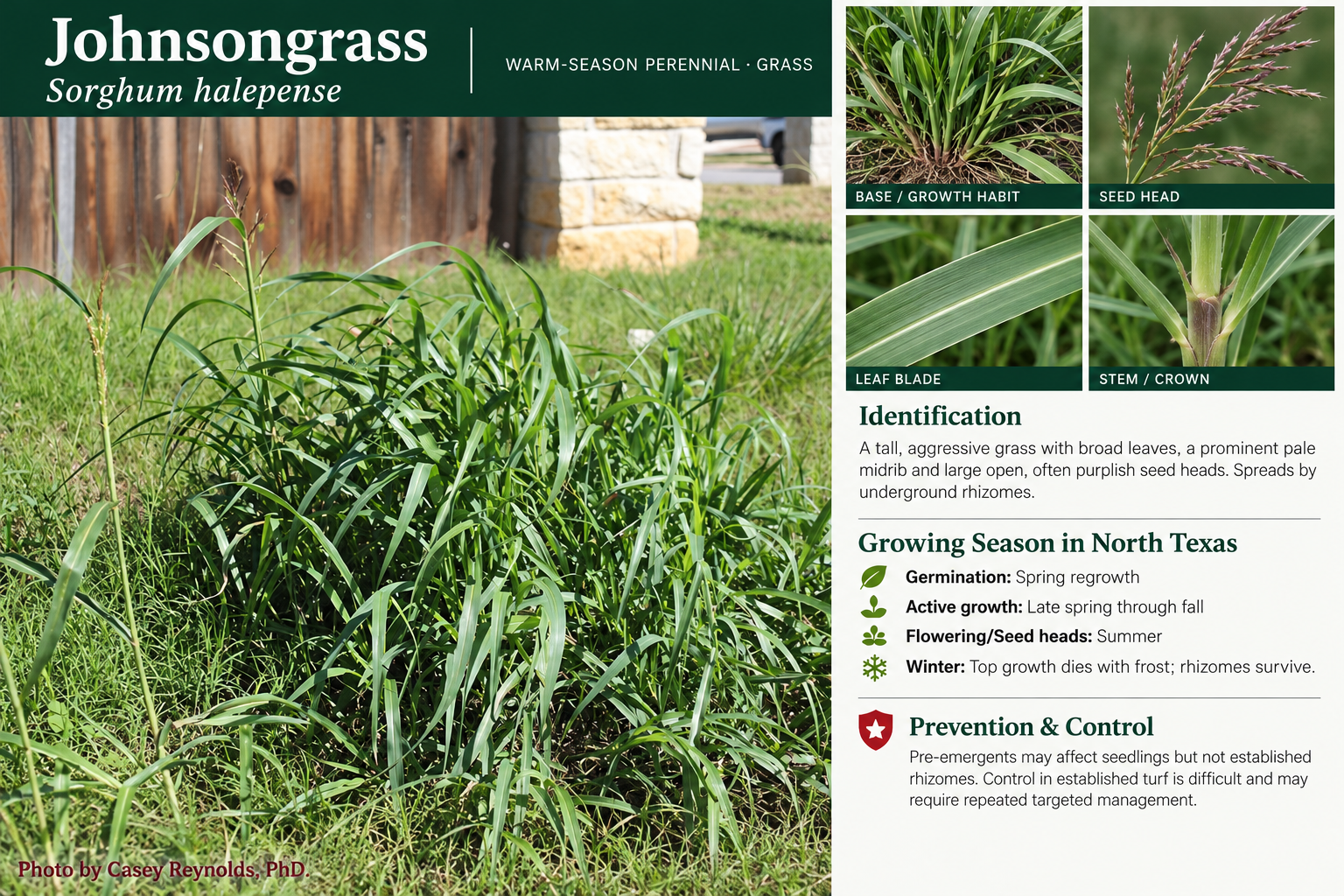
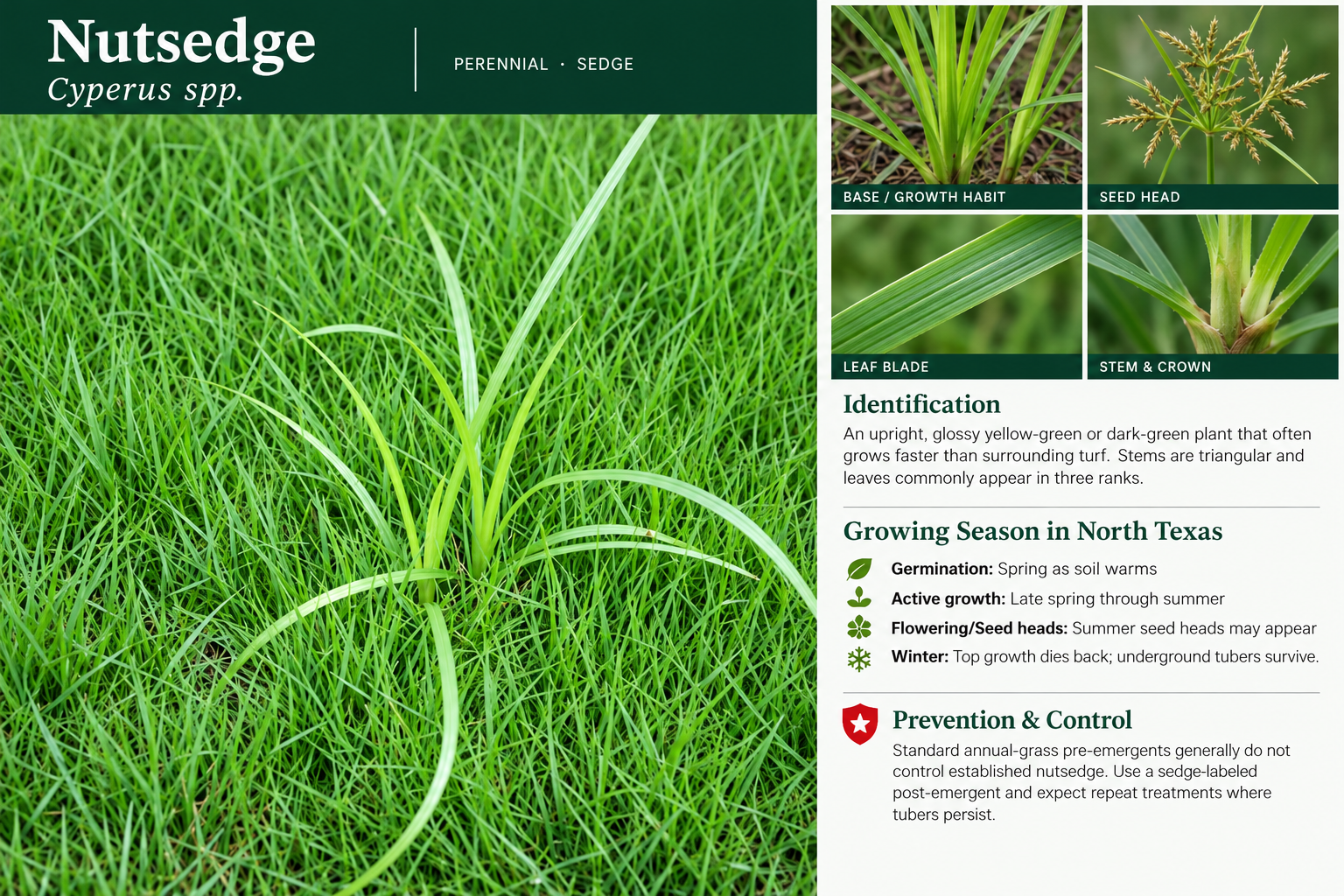
For established Nutsedge, Johnsongrass, and Dollarweed, pulling or digging alone usually won’t solve the problem. Underground parts left behind can produce new growth, so these weeds often require repeated control efforts and targeted treatment.